Rapid acquisition – The implications for integrated product support
Read the article from our experts below.
Rapid acquisition – The implications for integrated product support
By Mark Willis, Global Head of Integrated Product Support, and Kara Shaw, Principal ILS Engineer
As is common knowledge, the planet today is a very unstable place, and we are seeing the rules-based world order being undermined daily. With international tensions rising, current predictions suggest that a widespread European conflict could occur within three to five years, and beyond Europe, China appears to be increasing its influence in the Asia Pacific region with Taiwan being a likely target. Against this background, defence budgets are seeing significant increases, countries around the world are rearming at a pace not seen since the end of World War 2 and governments are being forced to make difficult political decisions about where to prioritize defence spending.
The Ukraine conflict has driven a change in technological landscape, with capability produced in days and weeks rather than years and decades; these changes have raised questions about the relevance of Integrated Product Support (IPS) (formerly Integrated Logistic Support (ILS)) in this evolving rapid acquisition environment. This paper offers Pennant’s perspective on the challenges posed by the rapid acquisition environment and the future application of IPS.

At this stage it is worth reminding ourselves of why we “do” IPS; the purpose of which, is to influence the design and integration of systems from a support perspective to achieve cost-effective (optimized) system availability. Accepted thinking based on Blanchard’s ‘Life Cycle Cost Iceberg’ is that up to 80% of life cycle cost (LCC) is incurred during the in-service and disposal phases of a project, with only 20% being spent during the acquisition phases. Ergo, to reduce LCC of a capability, the major areas to address are the in-service and disposal phases. In short, the best approach/model to achieve the optimal availability (readiness) versus cost ratio, is IPS.

Of course, the foregoing paragraph only offers academic justification for IPS; it does not address the reality of today’s technological landscape, when even considering the rapid acquisition environment, governments will still purchase exquisite capability, in the form of large capital programs such as ships, submarines, vehicle fleets and aircraft.
However, this capability must still be supported, and recent publicized failures to achieve the availability required of both extant and emerging defence commitments suggest the way in which ILS/IPS has been applied to capital programs could be considered haphazard, and bordering on negligent. Ships sitting alongside undergoing repair, submarine fleets inoperative, vehicle fleets delivered without a coherent support solution are all examples of the ‘bright shiny kit first, support solution (much) later’ approach to defence procurement.
It begs the question why senior leaders are surprised at the lack of asset availability when so little attention seems to be paid to developing the support solution during acquisition. Project managers are seemingly allowed to get away with paying only lip service to the support solution during system development and delivery in the vain hope that support will be addressed during the in-service phase.
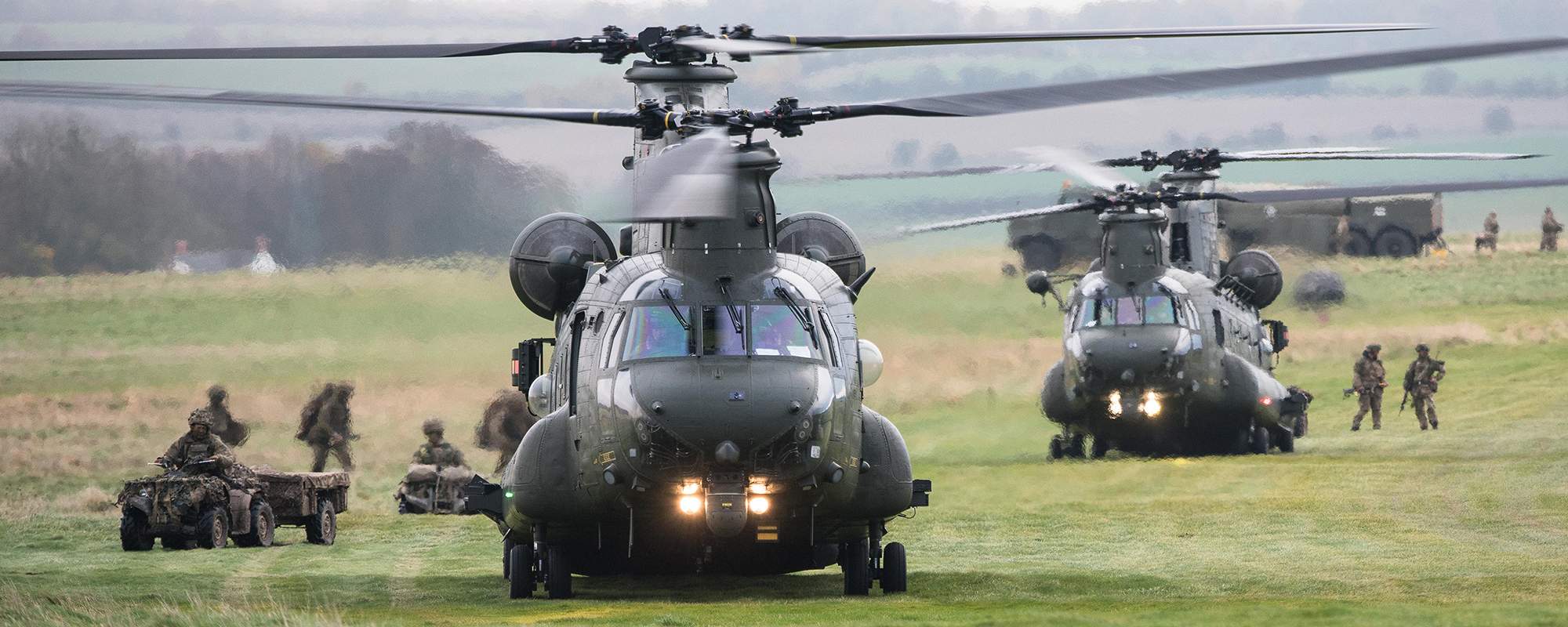
What the increase in technological pace offers us is the ability to take a multi-pronged approach to IPS based on prioritized need. Pennant sees the acquisition and employment of single use capability as being less of an IPS challenge; a single use capability typically requires only a minimalist support solution which may be as simple as an operator’s handbook. Even if we were talking “gold standard”, – this solution would require a small Logistics Support Analysis Record (LSAR) to host the publication data modules, with the creation of the operator’s handbook being straightforward using proprietary software solutions; however, more often than not, this endeavor would probably be undertaken using proprietary office software programs.
Looking now to more complex capability, the landscape begins to change; there is a government imperative and industry recognition that rapid acquisition is required to replace the erstwhile complex acquisition cycles – it is being demanded by governments worldwide.
Whilst to date, rapid acquisition has been ably demonstrated in unmanned systems, we are now seeing rapid acquisition (or minimum viable capability principles) applied to incredibly complex assets. As previously stated, the rapid acquisition cycle is measured in weeks and months, not years and decades.
Experience in Ukraine has demonstrated what is possible when rapid acquisition principles are applied, but few people have addressed the question of the support solution. Whether we talk about rapid development and delivery in the USA and Europe, or talk about minimum viable capability in Australia, it begs the question “what does rapid support or a minimal viable support solution look like?”. This question was asked at the S1000D & IPS Forum in Brussels in 2024 with no coherent answer forthcoming. We certainly cannot repeat the Urgent Operational Requirement mistake of rushing to introduce capability with no thought to the support solution…and then try to muddle through until the support solution can be developed and implemented many years later. What is needed is an improved approach to support solution development in the rapid acquisition space?

So, what does developing a rapid acquisition support solution look like? Let’s assume that we are acquiring capability and we are directed to field the first version in 6 months’ time. From a support perspective, we now have a few challenges:
- Very short flash to bang to develop the support solution – not forgetting the adage…if you can’t get to the fight, if you can’t stay in the fight, there is no fight. So, yes, we do need a support solution.
- Did the forerunner or a similar capability have a support solution which we can plagiarize? How effective was the support solution and how much time will it save?
- Was the erstwhile support solution modelled? If so, how much of the model can we re-use to make our life easier?
Can we assure the new support solution using modelling and thus negate the need for reliability and logistics demonstrations thus saving more time.

The above list of questions is not exhaustive by any means; it is merely an example of the sort of thinking that your IPS team must go through to devise a rapid acquisition support solution. Pennant understands that the rapid acquisition of capability requires an iterative approach to developing the final solution. However, to stay in the fight, the support professionals need to move quickly to develop a “good enough” (60%) support solution relying on re-use and modelling as much as possible. Thereafter, the support solution can be modified to meet engineering changes and design iterations as they occur. One phrase heard recently in the support community goes something like “sprint to 60% and then spiral to 80%”.
The support world is changing to meet the rapid acquisition landscape. Pennant’s Auxilium® toolset meets the needs of that changing landscape. With rapid acquisition in mind, its flexibility and modelling power places Auxilium® in the prime position to meet modern rapid support solution challenges.
Pennant International Group PLC
Registered office:
Unit D1 Staverton Connection
Cheltenham
Gloucestershire
GL51 0TF
Pennant International Group PLC is a company registered in England. Company no. 3187528